Definition
Name Variants
Textiles, Modifiers, and Values
Choose a textile from the dropdown list on the upper left. Select modifier(s) for your selected textile, if any. The bar graph will generate visualizations that reflect your selections. X- and y-axis variables can also be changed.
A note about modifiers: The modifier dropdown list will include only those modifiers that relate to the selected textile. Choose OR to see results that match any of the selected modifiers. Choose AND to see results that match all of the selected modifiers. You can select more than one modifier in each field.
Essay
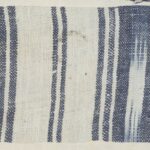
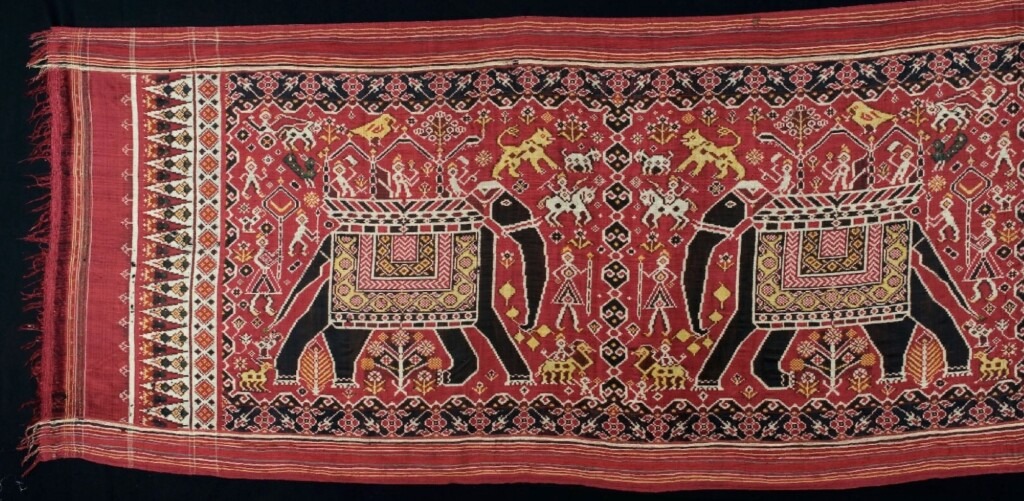
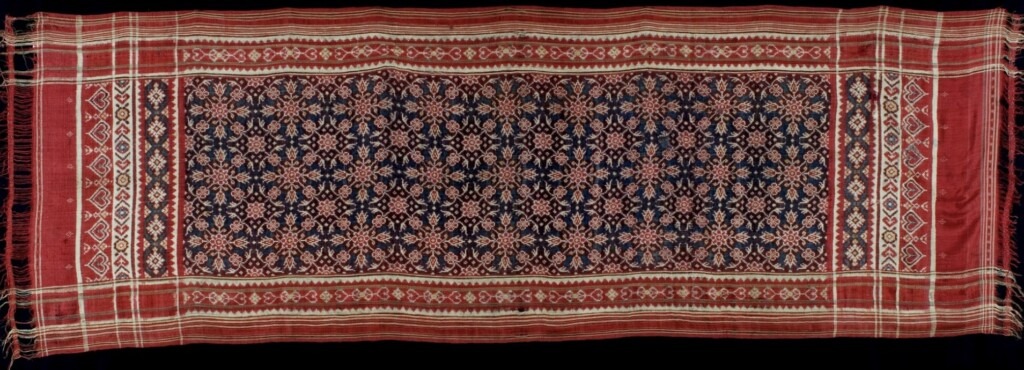
True patola are silk cloths woven in double-ikat, a complicated technique in which both the warp and weft threads are tie-dyed before weaving, and the intended pattern emerges after weaving. One tell-tale feature of ikat is an indistinct line between color changes, due to imprecise control of the final position of the dyed threads, such as in this example of a gingham with an ikat stripe on its right side. Highly-skilled patola weavers carefully plan the shifts in color and adjust after weaving to avoid this bleed at the color changes. In this intricate double-ikat elephant patola (below left), the stark white outline of the elephants’ trunks and legs appear stepped, as a curve in the plainweave pattern would be nearly impossible to achieve in this technique. Because of the extreme difficulty of this method, many patola have simpler—but still quite complex—geometric rather than figural patterns. The aesthetic of double-ikat patola was also imitated by block-printing on cotton, a less expensive but still desired textile. In this later cotton example (below right), geometric sections imitate the double-ikat appearance of small steps, while the elephant border has curved lines and imprecise block placement. Ruurdje Laarhoven describes requests for patola sent to the VOC office in Surat for specific patterns and sizes—the cargo data does not clarify the specific patterns, but it does often include a length in ‘asta.’ [1] In our data covering the period from 1700–1724, most entries indicate whether the patola are silk or cotton, which is also reflected in the values assigned to each cargo. Cotton examples are valued at approximately 1.5 guilders per piece, while silk patola range from 2.5–18 guilders per piece, likely dependent on the varying effort required by the pattern and size—Laarhoven estimates a size range between 1.7–5.1 x 1.05 meters. [2]
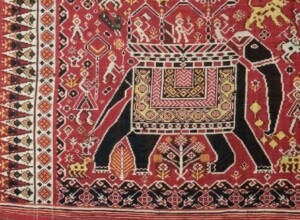
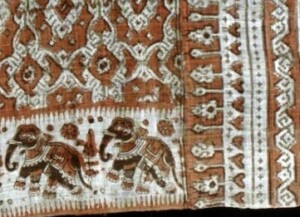
Patola were originally produced in Gujarat in northwest India, since the 12th century, and almost all 124,840 pieces in our 1700–1724 data originated in this region, both true silk and imitation cotton patola. Many of the cargos in our data describe the patola as being from Surat, which is the Gujarati port city where the VOC traded, while Patan, the traditional center of production for patola, is about 400km inland. The largest shipment was in 1713, when two ships (‘t Ghijn and Horstendaal) traveled from Surat to Batavia, carrying 18,900 pieces of silk patola valued at 137,256 guilders (average price per piece of 7.25 guilders) and 3,900 pieces of cotton patola valued at 5,156 guilders (average price per piece of 1.32 guilders). [3] While these large shipments of thousands of patola traveled from Surat to Batavia or Sumatra, most shipments were very small, just 1–10 pieces, redistributing patola from Batavia to elsewhere in the Indonesian archipelago. In Dutch cargos, the most expensive silk patola shipped to the kingdoms and sultanates of Sulawesi, Java, Timor, and Sumatra, and less-expensive silk and cotton patola shipped to Batavia and Sumatra. Sylvia Houghteling has looked carefully at these data and differentiated these markets in her 2023 essay, noting that many extant examples of true patola in Indonesian collections reflect this distribution. [4]
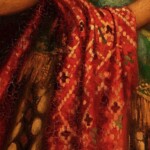
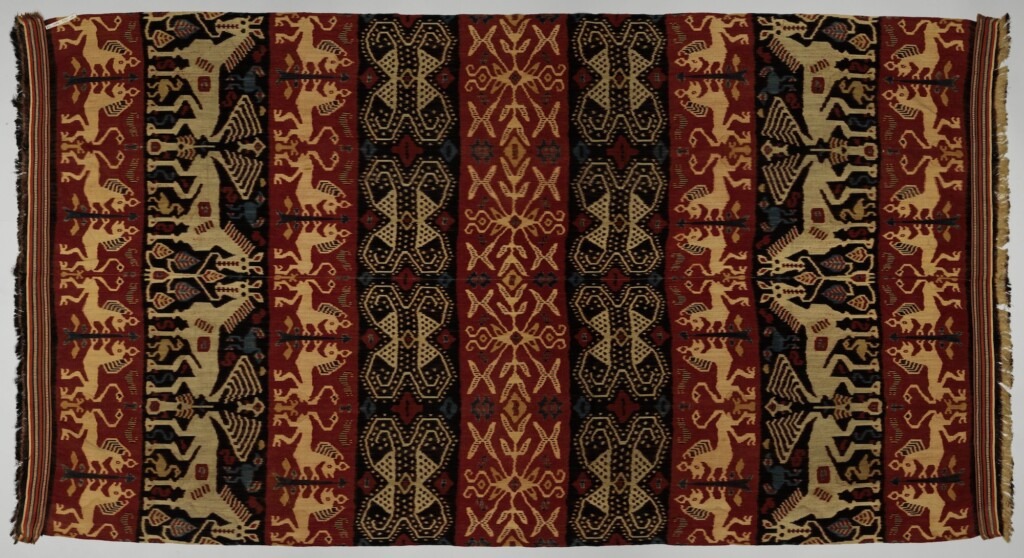
Houghteling notes that the finest examples of patola were used ceremonially and were preserved as heirlooms, while simpler geometric patterns, of both cotton and silk, were worn as clothing such as shoulder-cloths, sashes, chest-wrappers, trousers, and skirts. A 20th-century painting of a dancer in a Javanese court includes a patolu sash wrapped around her waist and held in her hands, with the signature double-ikat squares making up a geometric pattern. Many of the patola shipping around the Indonesian archipelago are described in the ship cargos as gifts to local sultans and rajas, which further underscores the prestige of this textile. Specific motifs were desired by distinct regions and for specific purposes—so patterns like the elephant example above were especially valued in the Spice Islands (Maluku). [5] In 1784, the Sultan of Surakarta on Java decreed that the star pattern on this geometric patolu could only be used by himself and his brothers for screens on their sedan chairs. [6]
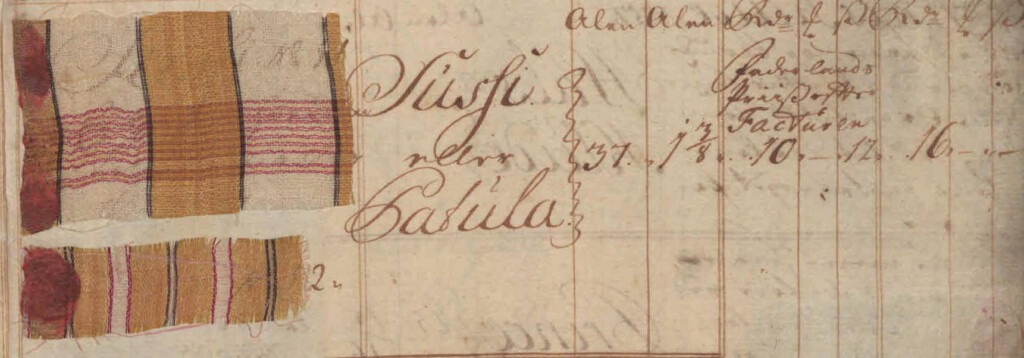
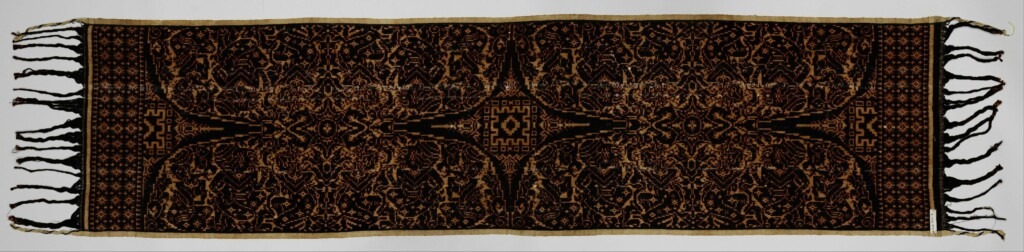
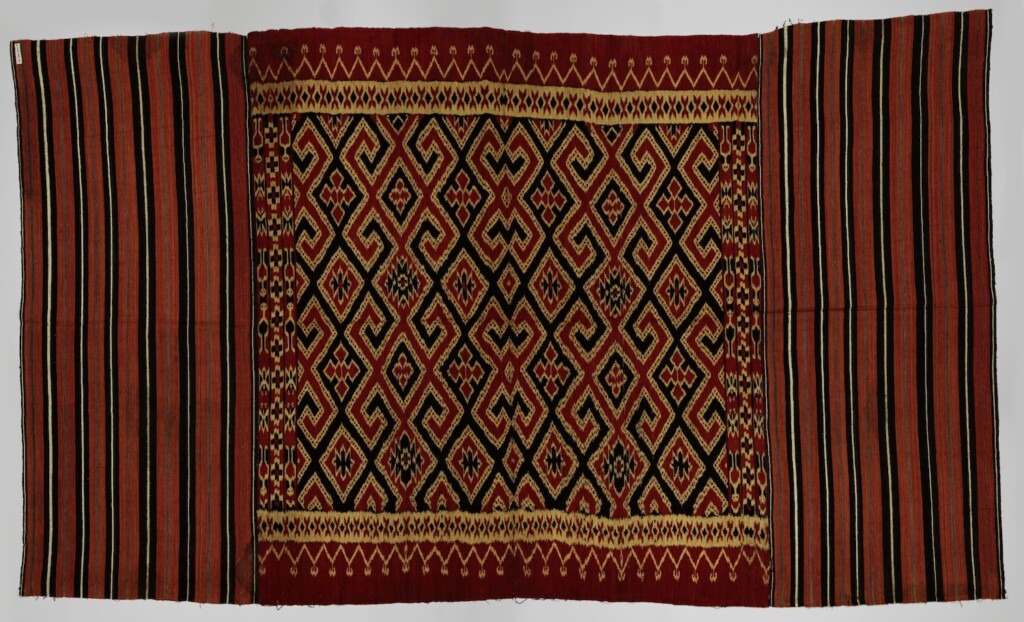
Indonesian taste for the patola aesthetic is further demonstrated by the development of local traditions that either incorporate the double-ikat technique, as in a Balinese example from the 19th century, or 20th-century example which repeats patola motifs, both of which are in the related image gallery below (I haven’t yet been able to examine these to see if they also use an ikat weave structure). Confoundingly, we have two swatches from 1727 labeled by a contemporary hand as “susli or patula,” which bear no resemblance to any of the patola described and illustrated here—instead, these are a straightforward checkered pattern woven of solid-colored threads, neither ikat in structure nor printed in imitation.
MK (May 2025)
Related Images
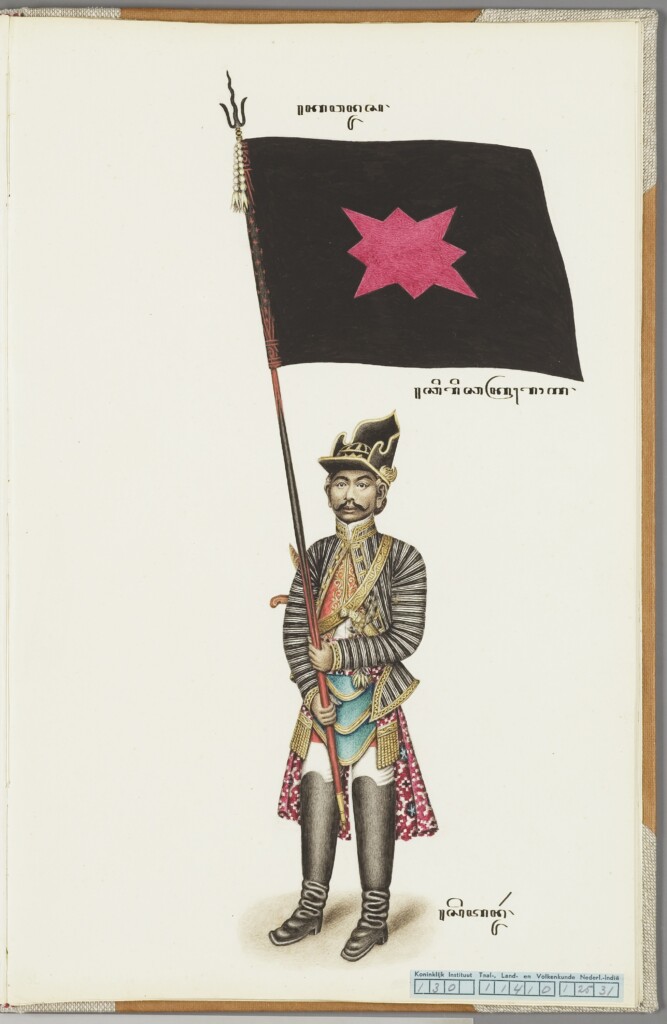
Member of the Palace Guard of the Sultan of Yogyakarta
The cloth tied around the man's waist and framing his legs represents a patolu cloth

Ceremonial patolu cloth with Elephants and Lions
Silk patolu cloth with elephants and lions.
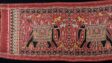
Shoulder cloth (schouderdoek)
Double-ikat woven cloth with Javanese Wayang characters
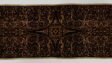
Wrapping cloth (omslagdoek)
Woven cloth with horses and patola motifs. Unclear whether this has an ikat weave structure.
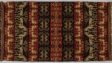
Death cloth (dodendoek)
Woven cloth with geometric motifs. Unclear whether this has an ikat weave structure.
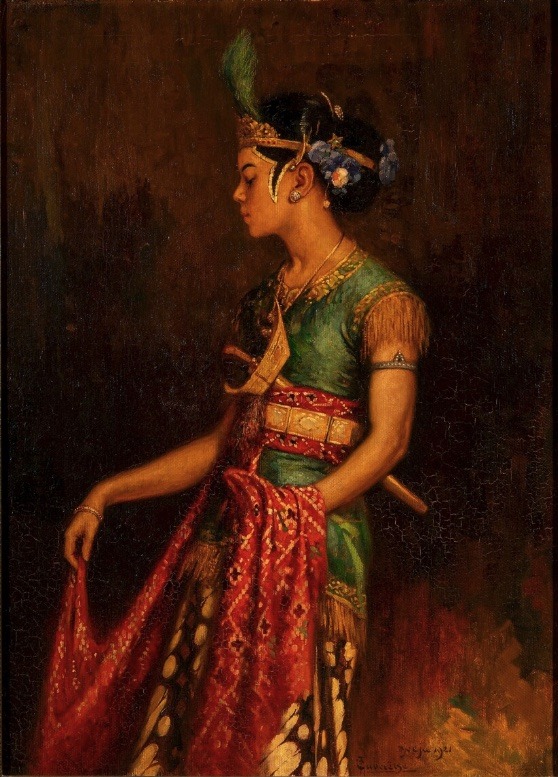
Javanese Court Dancer
Dancer wearing a batik hipcloth and holding a patolu dance shawl

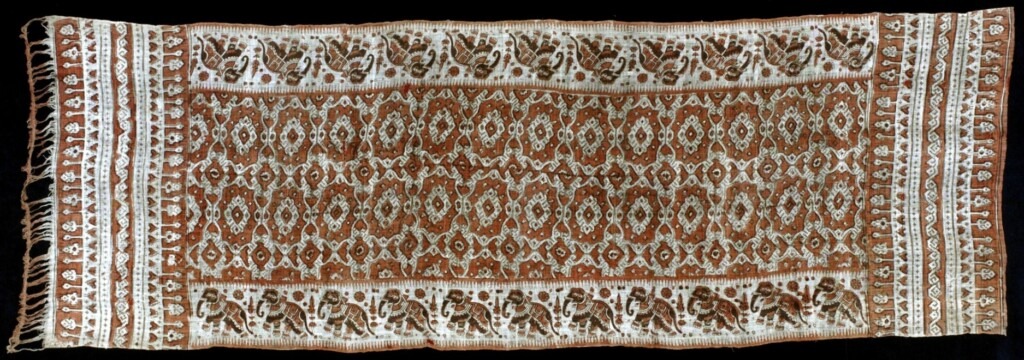
Ceremonial patolu cloth
Cotton block-printed imitation patolu cloth, exported to Sulawesi
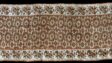
Susli or Patola
Two swatches: yellow, black, and white stripes crossed with red stripes; and yellow, white, red, and black stripes.
Footnotes
Ruurdje Laarhoven, “The Power of Cloth: The Textile Trade of the Dutch East India Company (VOC) 1600–1780,” (Australian National University, 1994), appendix: 49.
Ibid., 48.
Judith Schoonveld-Oosterling et al, Bookkeeper-General Batavia (Amsterdam: Huygens Instituut voor Nederlandse Geschiedenis, 2008–2013), https://bgb.huygens.knaw.nl, voyage number 15730.
Sylvia Houghteling, “The Filaments of the Textile Trade: Subtle and Broad Trends in Exports from South Asia to Maritime Southeast Asia,” Journal of Historians of Netherlandish Art 15:1 (Winter 2023). (link) Sylvia’s consideration of patola was the inspiration for writing this glossary entry. See John Guy, Indian Textiles in the East: From Southeast Asia to Japan (London: Thames & Hudson, 2009), 24–26, 87–97, for a number of examples and discussion of the Indonesian reception and use of these cloths.
Ruurdje Laarhoven, “The Power of Cloth,” 49.
Itie van Hout and Sonja Wijs, Indonesian Textiles at the Tropenmuseum (Volendam: LM Publishers, 2017), 85–87.